

THE ESTI-MED APPROACH
Why Clinician-Led Care Matters
Because the most important part of your treatment may be the decisions made before it begins.

When considering aesthetic or skin treatments, it is natural to focus on the procedure itself. What will it achieve? How much will it cost? What results can you expect?
But there is another question worth asking: who is making the decisions about your care, and what knowledge informs those decisions?
At Esti-Med Medical Group, treatments are guided by the clinical experience of a Registered Nurse and Independent Nurse Prescriber. It is an approach that places medical understanding, individual assessment and professional judgement at the centre of the experience.
Not simply because qualifications matter, but because the decisions behind a treatment can be just as important as the treatment itself.
The difference begins before treatment
Two people can walk into a clinic asking for exactly the same procedure, yet the most appropriate recommendation for each may be very different.
One person may be a suitable candidate, with realistic expectations and no significant clinical concerns. For another, medication, an existing health condition, previous treatment or a particular skin concern could make the same procedure unsuitable or require a different approach.
The procedure has not changed. The person receiving it has.
This is why clinical assessment matters.
A healthcare background brings knowledge of anatomy, physiology, medicines, medical conditions and how the body responds to treatment. These are not separate considerations reserved for hospitals or traditional healthcare settings. They can be relevant to decisions made in medical aesthetics, too.
An area of pigmentation, for example, may appear to be a straightforward cosmetic concern. But not every change in skin colour should immediately be treated with a peel, laser or other aesthetic procedure. Some skin changes warrant medical assessment before cosmetic treatment is considered.
Similarly, someone seeking facial rejuvenation may benefit from a different approach than the one they initially had in mind. Their skin condition, facial anatomy, medical history and expectations all influence what may be appropriate.
The value of clinical knowledge is not simply in carrying out a treatment. It is in recognising the circumstances that should change the treatment plan.
That may mean recommending another option, delaying treatment, seeking further medical advice or advising against a procedure altogether.
These decisions are part of good care, even when they result in no treatment being performed.
When technical skill meets clinical understanding
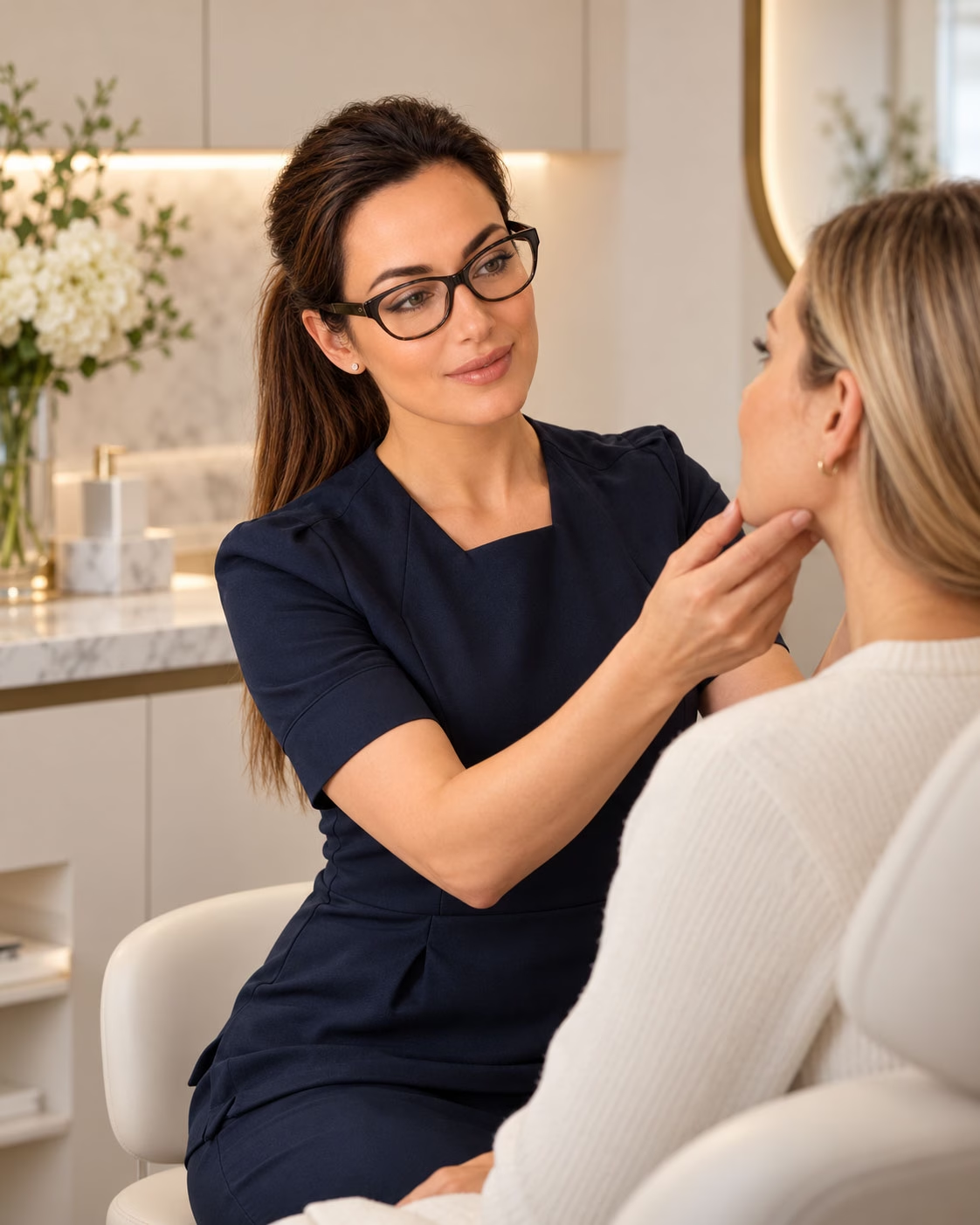
Performing an aesthetic procedure requires practical training, precision and an understanding of the technique involved. These skills are important, regardless of professional background.
But performing a procedure and making a clinical decision are not necessarily the same thing.
The distinction becomes particularly relevant when a treatment involves medicines, injections, skin injury, energy-based technology or potential complications.
Consider a treatment that is technically performed as intended. The technique alone does not establish whether it was the right choice for that patient. That depends on the assessment beforehand, the treatment selected, the risks considered and the person’s individual circumstances.
At Esti-Med, Katrina’s background as a Registered Nurse and Independent Nurse Prescriber adds a broader clinical perspective to these decisions.
Independent prescribing involves additional education and assessment, together with responsibility for appropriate prescribing within professional competence. This matters when treatment requires consideration of medicines, their suitability, potential interactions and the patient’s wider medical history.
Equally important is the professional responsibility to recognise the limits of one’s competence and arrange further assessment or referral when necessary.
This does not mean that being medically qualified automatically guarantees a better aesthetic result, or that treatment from a clinician is without risk. Procedure-specific training and experience remain essential.
It means that clinical education, prescribing competence and regulated professional accountability provide an additional foundation on which treatment decisions can be made.
And for patients who value a healthcare perspective as part of their aesthetic care, that distinction is meaningful.
Why what happens afterwards matters, too
Aesthetic procedures are often described in terms of their expected results. Less attention is sometimes given to what happens when recovery is not as expected.
Most people hope for an uncomplicated experience, but even appropriately performed treatments carry some degree of risk.
An unexpected reaction, persistent swelling, signs of infection or an unusual change following treatment may require more than reassurance.
Recognising when something is outside the expected recovery process, understanding its possible significance and taking appropriate action are important aspects of patient care.
Nursing practice involves assessment, clinical observation, escalation and professional responsibility. Those principles remain relevant when caring for patients undergoing aesthetic treatments.
As a Registered Nurse, Katrina is accountable to the Nursing and Midwifery Council’s professional standards, including the requirements to practise within her competence, preserve patient safety and act appropriately when concerns arise.
At Esti-Med, we believe that treatment should be approached with an understanding of the complete patient journey, not only the time spent performing the procedure.
That includes preparing patients properly, explaining meaningful risks, providing clear aftercare information and helping them understand when further advice may be needed.
A different way to approach aesthetic care
For us, being clinician-led is not intended to make aesthetic treatments feel unnecessarily medical or complicated.
Quite the opposite.
It allows us to offer an experience that feels welcoming and personal, while retaining the assessment, judgement and professional responsibilities that underpin healthcare.
Led by Katarzyna “Katrina” Walerysiak, Registered Nurse and Independent Nurse Prescriber, Esti-Med brings this philosophy to medical aesthetics, advanced skin treatments and selected nurse-led services.
The starting point is not which treatment you want to book. It is what you would like to achieve, whether treatment is appropriate and which options deserve consideration.
Sometimes this will lead to a treatment recommendation. Sometimes it will lead to a different suggestion. And sometimes the most appropriate advice is to do nothing at all.
We believe patients should feel comfortable receiving any of those answers.
Because genuine confidence should come from understanding your options and knowing that the recommendation has been carefully considered.
Good treatment begins with good judgement.
Your care starts with a conversation
If you are exploring aesthetic or skin treatment, Esti-Med offers a personal approach informed by clinical experience and professional assessment.
Whether you know what you are looking for or would simply like advice, we can help you understand your options and decide on an appropriate next step.
Prefer to speak to us? Call 01827 217 101